Kernelin
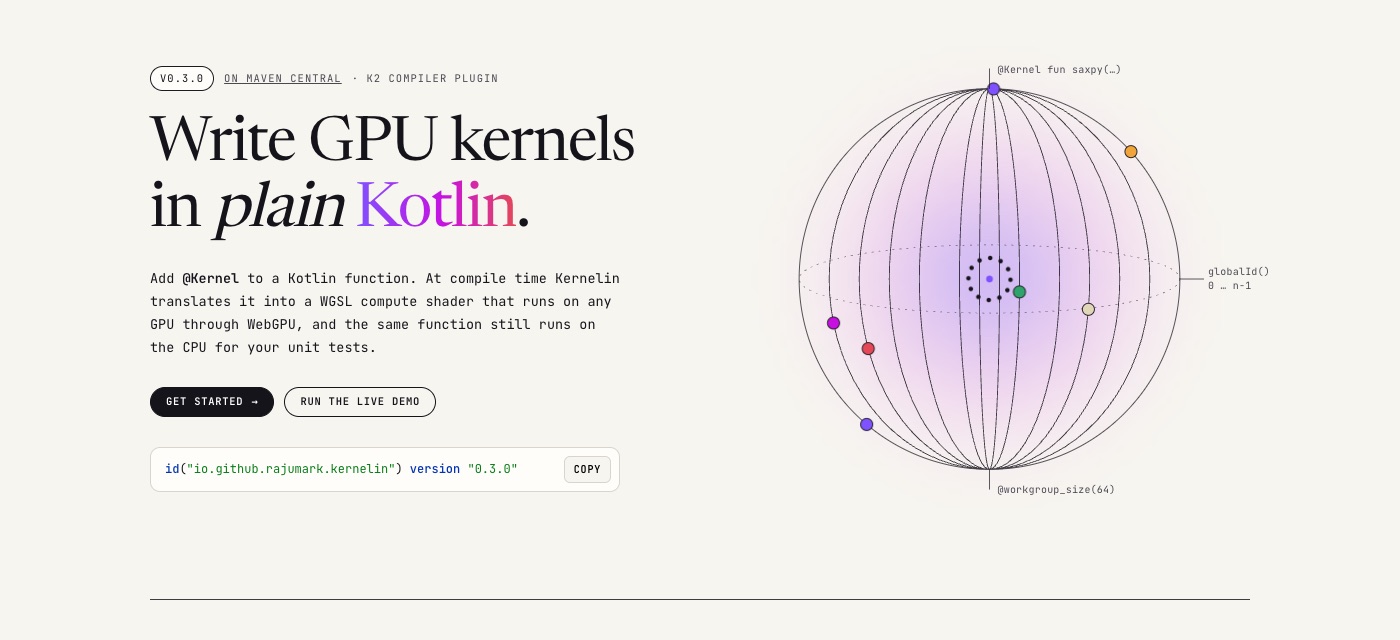
Write GPU code in plain Kotlin. Add @Kernel to a function and the compiler turns it into a GPU shader that runs through WebGPU on desktop, browser or Android — and the same function still runs on the CPU for unit tests.
8+ years and 20+ production apps in Kotlin/Java — my lead app, Tileswale, has 500K+ downloads. I work past the app layer too: AOSP firmware, custom ROMs, kiosk builds, and hardened fintech apps.
Write GPU code in plain Kotlin. Add @Kernel to a function and the compiler turns it into a GPU shader that runs through WebGPU on desktop, browser or Android — and the same function still runs on the CPU for unit tests.
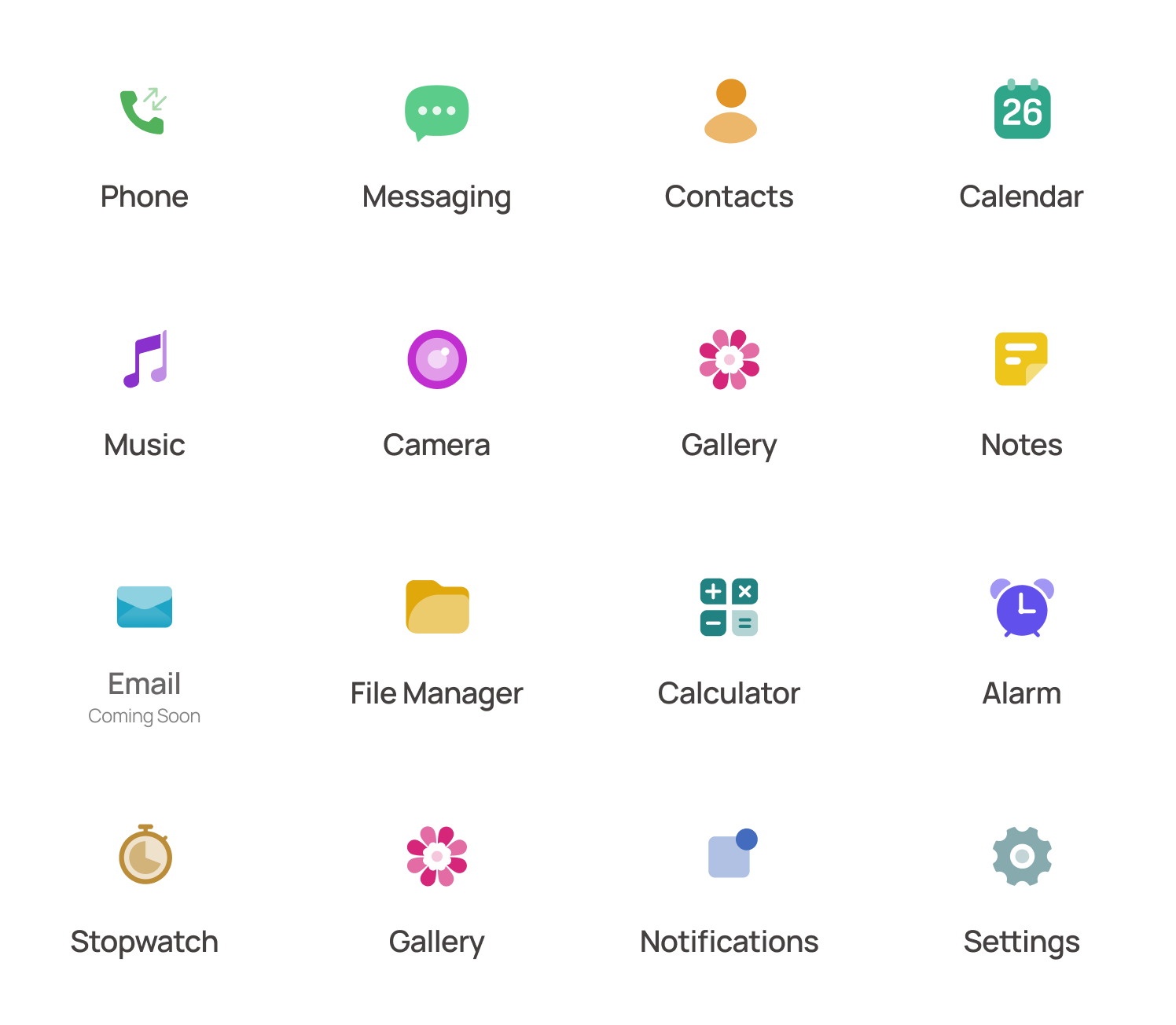
Custom Android firmware for a real device, from Android 11 to 15: system services, HAL changes and a full set of system apps (phone, messages, contacts, gallery, settings) with a minimal custom launcher.
On-device AI models packaged as drop-in Android libraries. Pure Kotlin, no dependencies, model bundled inside — no network, no permissions, minSdk 21.
Each library's website has its setup and dependency line.
An old black-and-white photo, colourised by Chromis, one of my open-source apps. It runs entirely on the phone: no servers, no uploads, and no internet permission.
BeforeAfter
Stack: Kotlin, Java, Android SDK, Kotlin Multiplatform, Jetpack Compose UI, AOSP Development, HAL / System Services, ROM Customisation, Kiosk Solutions, MVVM, Clean Architecture, Room, Retrofit, Koin, Dagger, Gradle, CI/CD.
Certificate: Modern Android App Development (Udemy)
My smart-reply model loses to Google's: 63.6% vs 72.8%. I publish that number anyway.
The comparison is on the library's page, including where it loses. Why I shipped it anyway →
Tell me about it in a few lines. No forms, just email. Based in Ahmedabad, India — open to remote collaboration worldwide.